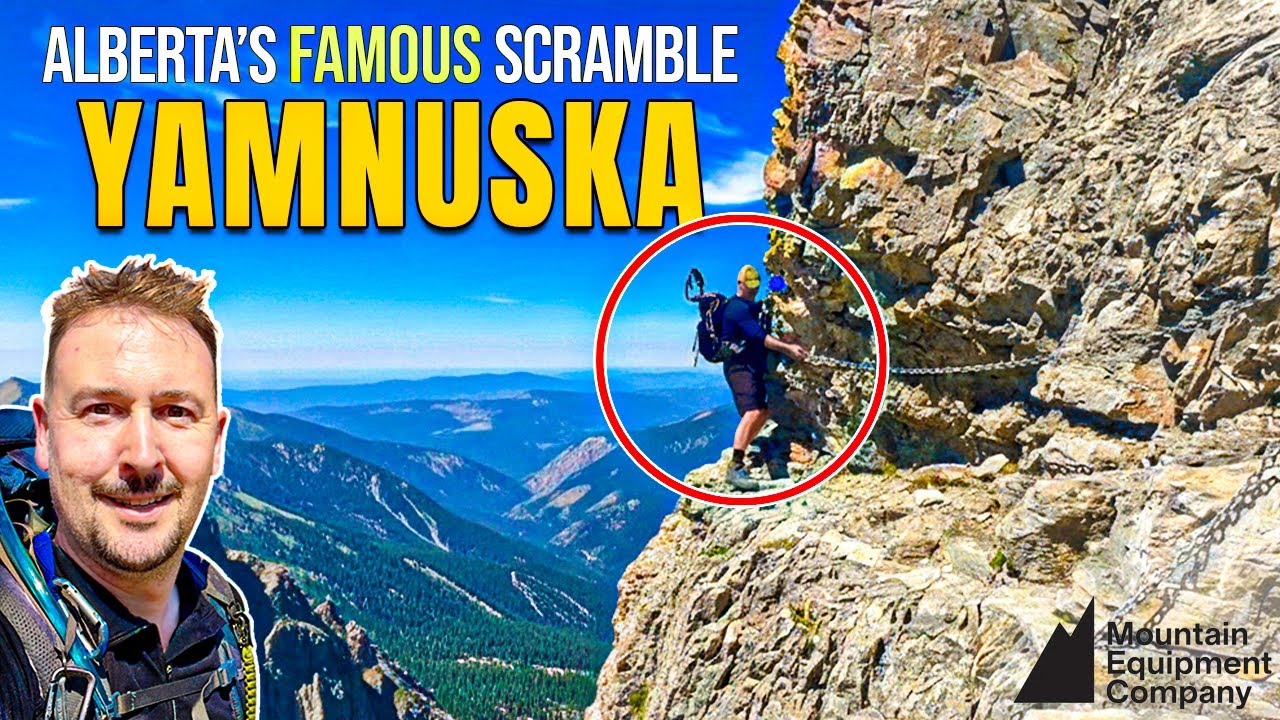
In this video, I take you along on an epic afternoon scrambling one of Alberta’s most iconic and infamous mountains—Mount Yamnuska. Known by its original Stoney Nakoda name Îyâmnathka, which translates to “flat-faced mountain,” this legendary peak was officially renamed Mount John Laurie back in 1961. Despite the official name change, locals and climbers alike still affectionately call it Yamnuska, and that’s how most people know it today. This adventure showcases the famous scramble route, an incredible challenge that features demanding scree sections and exposed chain climbing that will test your nerves and your skills.
Mount Yamnuska holds a special place in the hearts of mountaineers and hikers throughout Alberta Parks. Located just forty-five minutes from Calgary, this mountain sees heavy traffic year-round thanks to its remarkable accessibility and those warm chinook winds that sweep through the region, making winter climbing not only possible but surprisingly common. The mountain’s dramatic limestone face and challenging terrain have made it a proving ground for generations of climbers, and its proximity to the city means that adventurers of all levels are drawn to its slopes throughout every season.
In my video below, I walk through the experience exactly as shown and explained:
A Serious Mountain Requiring Serious Respect
Before I dive into the details of the scramble itself, I need to emphasize something critical: this is a serious mountain. Hikers have died here. This isn’t meant to scare anyone away from attempting Yamnuska, but rather to ensure that anyone who does go in with their eyes wide open and their preparation complete. The combination of technical terrain, exposed scrambling sections, and the presence of dozens of people on the mountain at once creates real hazards that you simply cannot ignore.
One of the most significant dangers comes from the scree route beneath the massive limestone face, where rockfall is a constant concern. When you have multiple parties moving above and below each other on loose terrain, rocks can and will come down. Staying alert throughout your entire ascent and descent is absolutely essential. Watch where others are positioned, listen for warnings from above, and always be conscious of what you might dislodge onto climbers below you.
Trail Statistics and What to Expect
Let me break down what you’re getting into with this day hikes adventure. The difficulty rating is hard, and that classification is well-earned. You’ll be dealing with extensive scree sections that demand careful foot placement and constant attention, plus those exposed chain sections that put you right on the edge of significant drops. This isn’t your typical well-groomed trail with switchbacks and rest stops.
The hazards you need to prepare for include rapidly changing weather conditions that can roll in without much warning, challenging route-finding where the path isn’t always obvious, significant exposure where a fall would have serious consequences, and that ever-present rockfall risk I mentioned earlier. These aren’t theoretical dangers—they’re real conditions you’ll encounter on the mountain.
The best season for tackling Yamnuska runs from late April through early fall, though this timing is heavily snow-dependent. Those chinook winds I mentioned earlier can create surprisingly variable conditions, sometimes clearing snow earlier than expected in spring or allowing for late-season attempts into autumn. Always check current conditions before heading out, and be prepared to turn back if the conditions aren’t right.
One piece of advice I cannot stress enough: bring plenty of water. The exposed nature of much of this scramble, combined with the physical demands of navigating scree and pulling yourself up chain sections, means you’ll be working hard under the sun. Dehydration can compromise your judgment and physical ability at exactly the moments when you need both to be sharp.
The Famous Scramble Route
The scramble route that I tackle in this video is what draws most people to Yamnuska. It’s an incredible adventure that takes you up close and personal with this mountain’s dramatic features. The scree sections are challenging in their own right—loose rock that shifts beneath your feet, requiring you to find the most stable path upward while conserving energy. Every step needs to be deliberate, and you’ll quickly learn which rocks will hold and which will slide away beneath you.
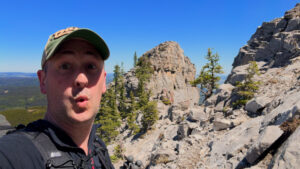
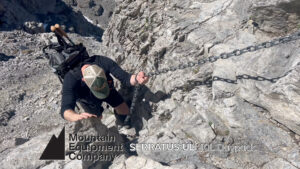
Then there are the chains. These exposed chain climbing sections are where Yamnuska really shows its character. Fixed chains have been installed on the steepest, most exposed sections of rock, providing handholds and security as you pull yourself up faces that would otherwise require technical climbing gear. The exposure here is real—you’ll have significant air beneath you, and the views both of where you’re going and where you’ve been will take your breath away for reasons beyond just the physical exertion.
The chain sections require both upper body strength and mental composure. You need to trust your grip, trust the chains, and trust your footwork all at once. For many people, this is their first experience with this level of exposure, and it’s normal to feel your heart rate spike a bit. The key is to move deliberately, maintain three points of contact when possible, and keep breathing steadily.
Understanding the Mountain’s Geology and Features
The massive limestone face that dominates Yamnuska’s profile is made of Cambrian limestone, and it’s this geological feature that has made the mountain such a landmark both visually and for the climbing community. That flat-faced appearance that gave the mountain its Stoney Nakoda name is the result of geological processes that created this dramatic vertical wall, and it’s this same face that hosts the technical climbing routes that have challenged generations of climbers.
As you scramble beneath and around this imposing wall, you gain a profound appreciation for its scale and character. The limestone is ancient, and the routes that cross it represent decades of climbing history in Kananaskis Country. Understanding that you’re moving through both a geological wonder and a piece of mountaineering heritage adds depth to the physical challenge of the scramble itself.
Alternative Options for Different Skill Levels
Not everyone who visits Yamnuska needs to tackle the full scramble route, and I want to make sure people know about the other options available. The mountain’s massive limestone face hosts over 115 climbing routes for those with technical climbing skills and the proper equipment. These routes range across difficulty levels and offer everything from single-pitch climbs to longer adventures up the face itself.
For families or those looking for a less technically demanding experience, there’s Raven’s End. This family-friendly hike is suitable for older kids and takes you to the base of the cliff face without requiring the scrambling skills needed for the summit route. At 3.5 kilometers with 430 meters of elevation gain, it’s still a legitimate workout, but it removes the technical challenges and serious exposure that define the scramble route. You still get to experience the mountain’s impressive presence and enjoy beautiful views without needing chains or advanced route-finding skills.
Essential Permit Information
Before you head out to Mount Yamnuska, you need to know about the permit requirement. A Kananaskis Conversation Pass is required, and you need to purchase this before you go. Don’t plan on buying it at the trailhead—get it sorted out ahead of time to avoid any issues or delays.
If you’re someone who hikes in K-Country regularly, I strongly recommend getting the annual pass. The day pass will work for a single trip, but if you’re like me and find yourself drawn back to these mountains multiple times throughout the year, the annual pass quickly pays for itself. The revenue from these passes goes directly toward maintaining and improving the trail systems, facilities, and conservation efforts throughout the region, so it’s money well spent supporting the places we love to explore.
The Yamnuska Experience
What makes this scramble so special isn’t just any single element—it’s the complete package. You get the accessibility of being less than an hour from a major city, the genuine challenge of technical terrain and exposure, the stunning views across the surrounding landscape, and the knowledge that you’re following in the footsteps of countless mountaineers who have tested themselves on this same rock.
The afternoon I spent scrambling Yamnuska reminded me why this mountain has earned its iconic status. Every section of the route demands something different from you. The approach gets your legs warmed up and your lungs working. The scree sections test your patience, balance, and route-finding skills. The chain sections require mental fortitude, upper body strength, and comfort with exposure. And throughout it all, you’re surrounded by the raw beauty of the Rocky Mountain landscape.
Being on the mountain with dozens of other people creates its own dynamic. You’re not alone in the wilderness here—you’re part of a continuous flow of climbers and scramblers, each group moving at their own pace, each person finding their own relationship with the mountain. This means you need to be courteous, communicate with others about passing or waiting, and always be conscious of how your movements might affect those above or below you.
Final Thoughts on Tackling Yamnuska
Mount Yamnuska, or Îyâmnathka, or Mount John Laurie—whatever name you use, this mountain delivers an unforgettable experience for those who come prepared and respect its challenges. The combination of accessibility and genuine mountaineering experience makes it unique in the region. You can leave Calgary after lunch and be pulling yourself up chains with serious exposure by mid-afternoon, then be back home for a late dinner. That convenience is remarkable, but it shouldn’t breed complacency.
Every time you head into the mountains, but especially on routes like this one with technical challenges and real consequences, you need to bring the right mindset along with the right gear. Check the weather forecast, tell someone your plans, carry the essentials, bring that extra water, and be honest with yourself about your abilities and the conditions you encounter. The mountain will still be there if you need to turn back—there’s no shame in making the smart call when conditions or circumstances aren’t right.
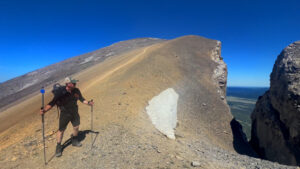
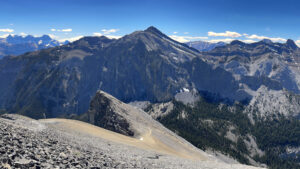
For those who do make it to the summit, the sense of accomplishment is genuine and well-earned. You’ve navigated challenging terrain, overcome exposure that tests your nerve, and stood atop one of Alberta’s most recognizable peaks. The views from the top stretch across the prairies to the east and deep into the Rocky Mountains to the west, offering a perspective that few experiences can match.
Whether you’re a seasoned scrambler looking to tick off another classic route, someone ready to push beyond easier hikes into more technical terrain, or a climber who wants to experience the approach and context for those 115+ routes on the face, Yamnuska offers something special. Just remember: this is a serious mountain that demands serious respect, proper preparation, and constant awareness. Come ready for the challenge, stay alert throughout your time on the route, and you’ll have an epic adventure on one of the most iconic peaks in the Canadian Rockies.